Kingston
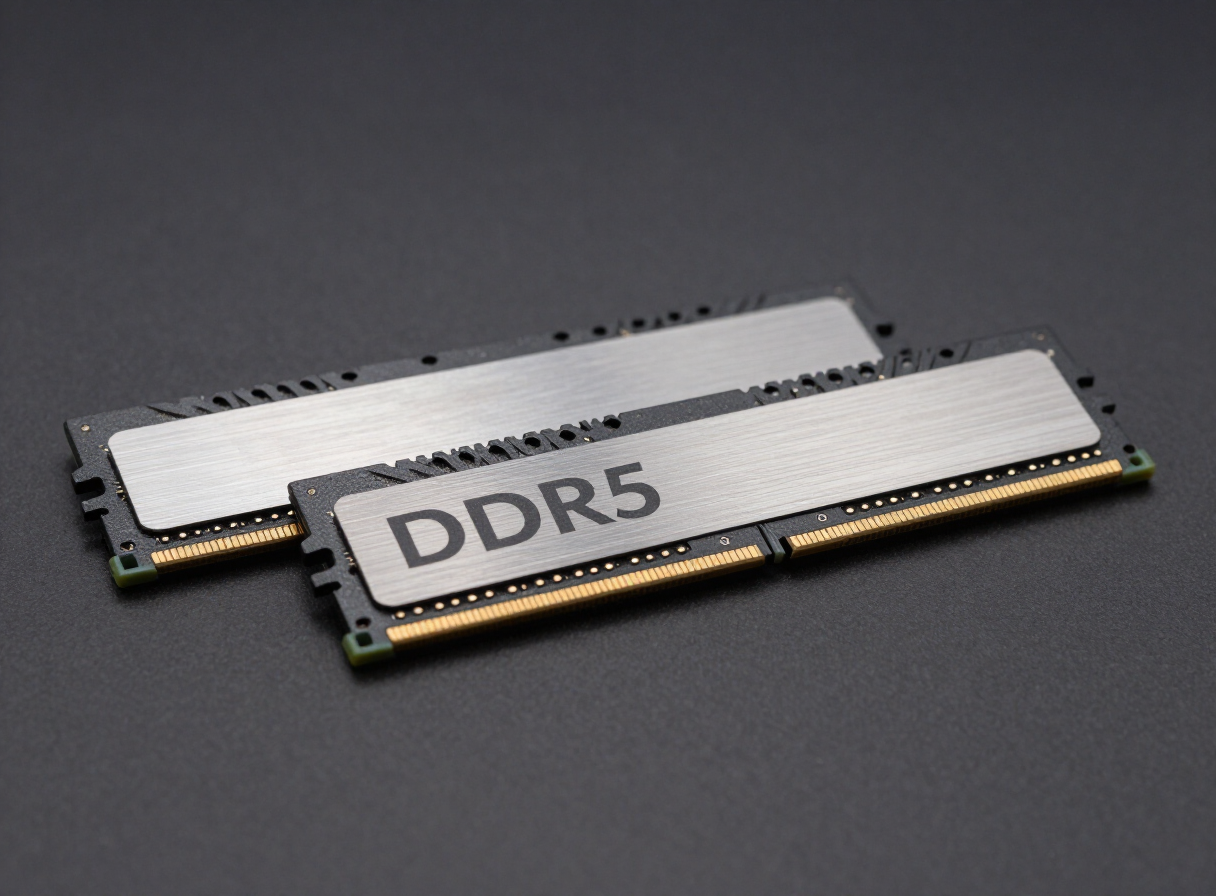
Kingston FURY Beast DDR5 16GB 5600MHz
Who this is for: builders after 16GB of DDR5 at 5600MHz for mainstream gaming and everyday productivity — it targets builders who want the generation jump without paying the halo-product premium. Because this is a single module, it runs in single-channel mode and gives up roughly half the memory bandwidth of a matched pair; for a new build, pair it with a second identical stick or buy a 2-module kit instead.
The Kingston FURY Beast DDR5 16GB 5600MHz is a 16GB DDR5 single module rated at 5600MHz with CL40 timings.
At 5600MHz and CL40, the real-world payoff shows up in bandwidth-hungry work such as 1% low frame rates on modern CPUs, code compilation and multi-track editing timelines. Kingston validates its modules across a wide list of motherboards before release. Before buying, confirm your motherboard supports 16GB in the configuration you plan to run.
Our take
Buy it if: you're adding a matching second stick to an existing identical module, or building a budget system you'll upgrade later.
Skip it if: it's for a new build. A single stick runs in single-channel mode, and 16GB is now the minimum for gaming.
Consider instead: Corsair Vengeance DDR5 32GB 6000, a matched two-module kit.
Technical Specs
Value-Performance
We may earn a commission from retailer links. This doesn't affect our rankings.
As an Amazon Associate I earn from qualifying purchases.
Available Vendors
Frequently Asked Questions
Will the Kingston FURY Beast DDR5 16GB 5600MHz run at 5600MHz out of the box?
Not automatically. Every module boots at a JEDEC baseline first, so you need to enable the XMP or EXPO profile in BIOS to reach 5600MHz at CL40. If the system fails to post, clear CMOS and try one speed step lower.
Is 16GB enough for my build?
16GB is the minimum we'd suggest for a modern gaming build — it will run today's titles, but 32GB is the recommended sweet spot if you stream, run Discord and a browser alongside the game, or want headroom for the next few years. Note that this listing is a single module, so it runs in single-channel mode and gives up roughly half the memory bandwidth of a matched pair — for a new build we'd recommend a 2-module kit of the same total capacity instead.
What does CL40 actually mean here?
CL40 is the CAS latency: the number of clock cycles between a read request and the first data returned. Because 5600MHz clocks faster than older kits, the same CL number represents less real time. True latency in nanoseconds, not the CL figure alone, is what to compare.
Can I mix this with memory I already own?
You can, but it is not recommended. Mixing kits means the memory controller has to find settings that satisfy every module, so you usually end up below the 5600MHz rating. Buying 16GB as a single matched kit avoids that entirely.
Want the background behind these specs? Read our memory guides.